Blogs
RMC Batching Plant supplier in gujarat
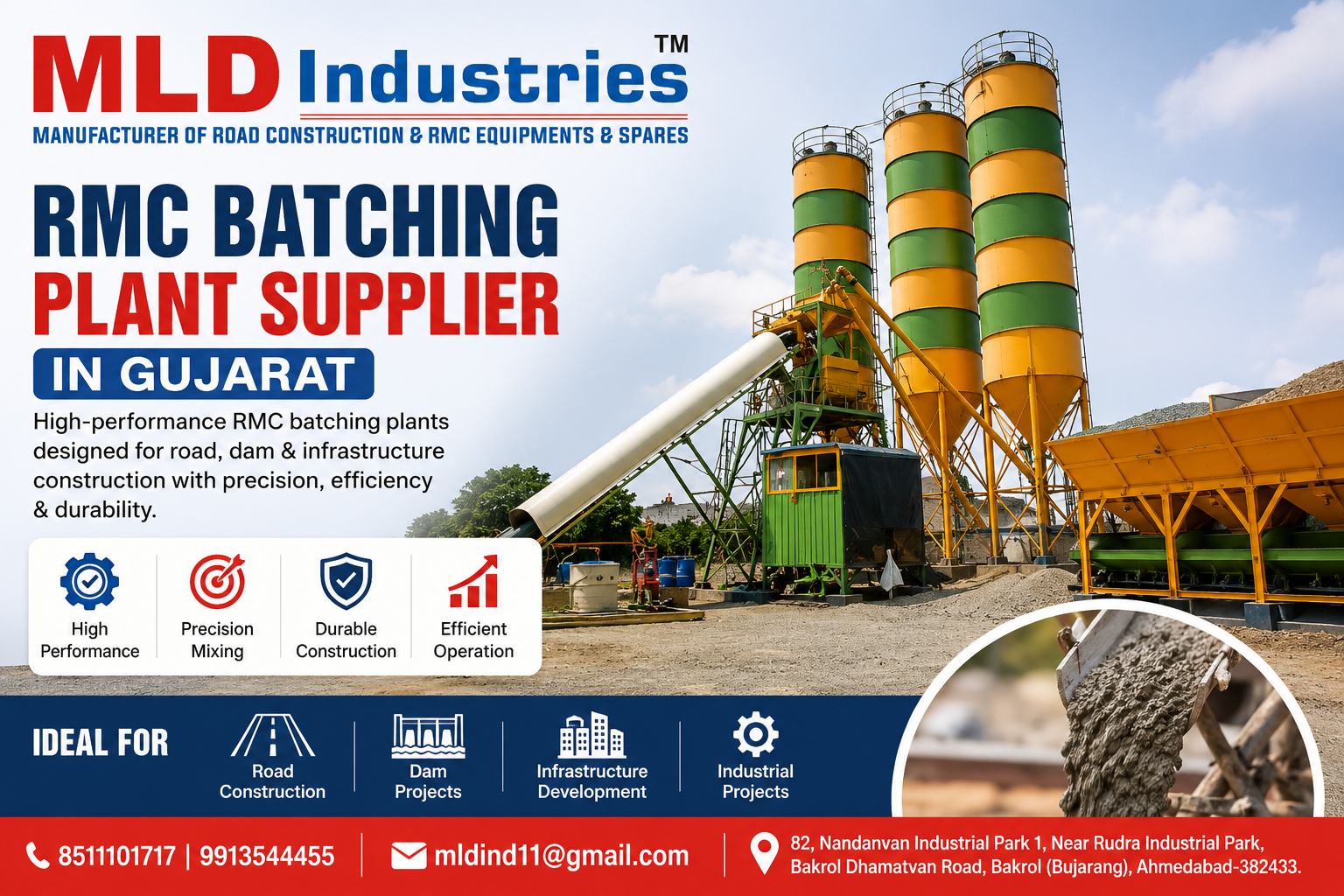
RMC Batching Plant Supplier in Gujarat
The construction industry in Gujarat is expanding rapidly due to continuous investments in highways, industrial infrastructure, smart cities, commercial developments, and large-scale public projects. This rapid growth has significantly increased the demand for dependable concrete production systems that can deliver consistent quality, faster output, and reliable operational performance. An RMC batching plant plays a critical role in meeting these requirements by ensuring accurate concrete mixing, efficient production cycles, and dependable output for demanding construction applications.
MLD Industries Supply
MLD Industries supplies stationary concrete batching plants designed for road construction, dam projects, industrial developments, and infrastructure applications. These batching plants are developed to handle continuous concrete production while maintaining operational stability, mixing accuracy, and production efficiency. Equipped with automated controls, durable components, and advanced material handling systems, modern batching plants help construction companies improve productivity and maintain consistent quality standards across projects.
Stationary RMC Batching Plants
A stationary RMC batching plant is commonly used in projects where a continuous supply of concrete is required over an extended period. These systems are ideal for high-volume production and are engineered to perform efficiently in demanding construction environments. In Gujarat, where industrial growth and infrastructure development continue to accelerate, batching plants have become an essential part of modern construction planning and project execution.
Understanding the Role
An RMC batching plant is designed to combine aggregates, cement, water, and additives in precise proportions to produce ready-mix concrete. The system ensures consistent mixing quality and accurate batching, which are essential for achieving structural strength, durability, and long-term construction reliability. The batching process is generally automated to reduce manual intervention and improve production consistency.
Importance in Gujarat
RMC batching plants provide a practical and efficient solution by offering:
- Accurate concrete proportioning
- Continuous concrete production
- Reduced material wastage
- Faster construction timelines
- Consistent concrete quality
- Improved overall project efficiency
Features
Important features commonly found in stationary batching plants include:
- PLC-based automated control systems
- Inline aggregate storage bins
- High-capacity pan or twin-shaft mixers
- Cement screw conveyor systems
- Water and additive weighing hoppers
- Conveyor belt material transfer systems
Applications
Common applications include:
- Highway and expressway construction
- Dam and canal projects
- Industrial infrastructure projects
- Airport runway construction
- Bridge and flyover projects
Automation Advantages
Major advantages of automated batching systems include better control over concrete quality, faster batching and mixing cycles, reduced labor dependency, and lower material wastage.
Selection Factors
Construction companies typically evaluate production capacity, automation levels, site conditions, mixer type, power consumption, and long-term operational reliability before choosing a batching plant.
Maintenance
Regular maintenance includes inspection of mixer blades, cleaning of conveyor belts, monitoring lubrication, checking electrical systems, and calibration of weighing systems.
Future Demand
The demand for RMC batching plants in Gujarat is expected to remain strong due to ongoing urbanization, industrial growth, and infrastructure expansion.
Conclusion
MLD Industries supplies stationary concrete batching plants designed for demanding construction environments where concrete consistency, operational efficiency, and production reliability are critical.
Frequently Asked Questions
Get In Touch
Filter Using Blog Tags