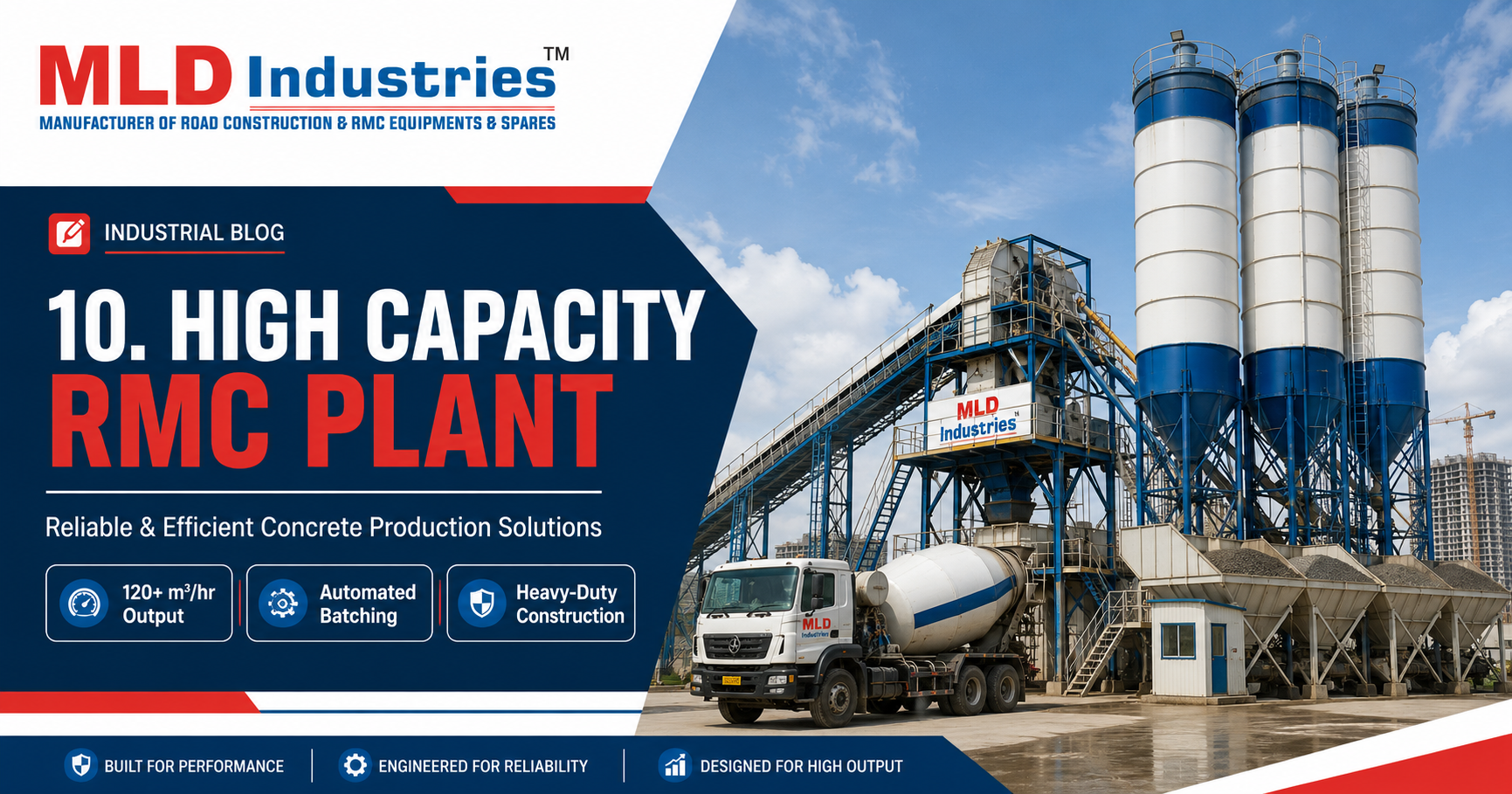
High Capacity RMC Plant
Discover high capacity RMC plants in Ahmedabad. MLD Industries offers reliable, efficient solutions for your concrete production needs. Learn more.
What is a High Capacity RMC Plant — Overview
A High Capacity Ready Mix Concrete (RMC) Plant is an industrial facility designed for the large-scale, automated production of concrete. Unlike smaller plants, these are built to produce significantly higher volumes of concrete per hour, often exceeding 120 cubic meters. They typically feature robust aggregate handling systems, multiple cement silos, high-capacity mixers, and sophisticated batching control systems. The entire process, from raw material loading to concrete discharge, is precisely controlled to ensure consistent mix designs and quality, making them ideal for major construction endeavors.
Key Features and Technical Specifications
- High Output Capacity: Designed to produce 120 cubic meters per hour or more, supporting large project timelines.
- Robust Aggregate Handling: Multiple hoppers and high-capacity conveyors for efficient loading of various aggregate sizes.
- Advanced Batching Control System: PLC-based automation for precise measurement of aggregates, cement, water, and admixtures.
- High-Efficiency Mixers: Twin-shaft or planetary mixers capable of rapid and homogeneous mixing of large batches.
- Multiple Cement Silos: Increased storage capacity for cement, reducing reliance on frequent deliveries.
- Integrated Water and Admixture Dosing: Accurate and automated dispensing systems for precise mix ratios.
- Durable Construction: Heavy-duty steel structures and high-quality components designed for continuous operation in demanding environments.
- Modular Design Options: Facilitates easier transportation, installation, and potential expansion.
Industrial Applications and Use Cases
- Large-Scale Infrastructure Projects: Construction of highways, expressways, bridges, and tunnels requiring massive concrete volumes.
- Major Real Estate Developments: Supplying concrete for high-rise residential buildings, large commercial complexes, and industrial parks.
- Airport and Port Construction: Meeting the stringent quality and volume demands for runways, terminals, and docks.
- Dam and Water Management Projects: Providing concrete for large-scale water retention structures and canal systems.
- Precast Concrete Manufacturing: Supplying consistent, high-quality concrete for precast element production facilities.
- Urban Redevelopment Initiatives: Supporting rapid construction in densely populated urban areas with tight schedules.
How to Choose the Right High Capacity RMC Plant
Selecting the appropriate high capacity RMC plant is a critical decision that impacts project efficiency and cost. Consider the following factors:
- Projected Concrete Volume: Accurately estimate the total concrete required and the peak hourly demand to match plant capacity.
- Site Constraints and Accessibility: Evaluate the available space for the plant, material storage, and ease of access for delivery trucks.
- Automation and Control Systems: Prioritize plants with advanced, user-friendly automation for consistent quality and reduced labor.
- Mixer Type and Capacity: Ensure the mixer can handle the required batch size and achieve uniform mixing within the specified time.
- Aggregate and Cement Storage: Assess the storage capacity needed based on delivery schedules and project duration.
- Environmental Compliance: Verify that the plant meets local environmental regulations regarding dust control and noise pollution.
- Supplier Reputation and Support: Choose a manufacturer with a proven track record, reliable after-sales service, and readily available spare parts.
- Customization Options: Determine if the plant can be configured to meet specific project requirements or site conditions.
Quality Standards and Compliance
For high capacity RMC plants, adherence to stringent quality standards is non-negotiable. Buyers should verify that the equipment is manufactured in compliance with relevant Indian Standards (IS) and international norms like ISO. This includes ensuring that components like load cells, sensors, and control systems are calibrated accurately and reliably. Reputable manufacturers will provide documentation detailing compliance with standards related to structural integrity, electrical safety (IEC standards), and material quality. A plant that meets these benchmarks guarantees consistent concrete quality, operational safety, and longevity.
Why MLD Industries' Experience and Capability Matters
MLD Industries, under the seasoned guidance of Mr. Poonam Panchal and the dynamic leadership of CEO Mr. Jaimin Panchal, brings over two decades of dedicated experience in manufacturing robust road construction and concrete production equipment. Our commitment to quality is deeply ingrained, stemming from a foundation built on decades of industry expertise. We understand the critical nature of high capacity RMC plants in supporting large-scale projects in Ahmedabad and beyond. Our manufacturing processes emphasize precision engineering and the use of high-grade materials, ensuring durability and operational efficiency.
Our technical team possesses extensive knowledge in designing and fabricating plants that meet diverse project demands. We focus on delivering reliable machinery that minimizes downtime and maximizes output. MLD Industries is not just a manufacturer; we are a partner committed to providing solutions that contribute to the successful completion of your construction endeavors. Our capability extends to offering customized configurations and comprehensive after-sales support, ensuring you receive a plant that perfectly aligns with your operational needs and project timelines.
Installation, Maintenance, and Care Tips
Proper installation and regular maintenance are crucial for the optimal performance and longevity of a high capacity RMC plant.
- Installation: Ensure the plant is installed on a firm, level foundation. Follow the manufacturer's guidelines meticulously for electrical connections, water supply, and material handling system setup. Proper calibration of all weighing and dosing systems is paramount immediately after installation.
- Daily Checks: Before operation, inspect all moving parts, conveyor belts, and chutes for wear or damage. Check fluid levels in hydraulic and lubrication systems. Verify the cleanliness of the mixer drum.
- Regular Cleaning: Thoroughly clean the mixer, hoppers, and discharge chutes after each shift to prevent material buildup, which can affect mix consistency and equipment performance.
- Lubrication: Adhere to the recommended lubrication schedule for all bearings, gears, and moving components to minimize friction and wear.
- Calibration: Periodically recalibrate all weighing systems (aggregates, cement, water) to ensure accuracy in batching. This is critical for maintaining concrete quality.
- Filter Maintenance: Regularly inspect and clean or replace air filters and water filters to ensure clean input materials and prevent system blockages.
- Wear Parts: Monitor wear on mixer blades, liners, and conveyor belts. Replace them proactively to avoid unexpected breakdowns and maintain efficiency.
Frequently Asked Questions
High capacity RMC plants are engineered to produce significantly more concrete per hour than standard units, typically ranging from 120 cubic meters per hour upwards. This increased output is essential for large-scale construction projects that require substantial volumes of concrete within tight deadlines.
Automation in high capacity RMC plants ensures precise measurement of all ingredients, leading to consistent concrete quality batch after batch. It also enhances operational efficiency, reduces the need for extensive manual labor, and allows for detailed production reporting, which is vital for project management.
Site selection should consider proximity to project sites to minimize transportation costs and time, accessibility for large trucks, sufficient space for the plant and material storage, and compliance with local environmental and zoning regulations. A stable foundation is also critical.
The mixer type is crucial as it dictates the speed and homogeneity of the concrete mix. High capacity plants often utilize twin-shaft or planetary mixers, which are designed for rapid, thorough mixing of large volumes, ensuring uniform distribution of all components for superior concrete quality.
Regular maintenance includes daily inspections of moving parts, thorough cleaning after each shift, scheduled lubrication of all components, periodic calibration of weighing systems, and proactive replacement of wear parts like mixer blades and liners to ensure continuous operation and prevent breakdowns.
Yes, many manufacturers offer customization options for high capacity RMC plants. This can include adapting the number of aggregate bins, cement silo capacity, specific automation features, or even the overall plant layout to better suit the unique requirements of a particular project or site.
Conclusion
For ambitious construction projects in Ahmedabad and across Gujarat, investing in a high capacity RMC plant is a strategic decision that ensures efficiency, quality, and timely completion. The ability to produce large volumes of precisely controlled concrete is fundamental to modern infrastructure development. When selecting a plant, prioritize robust engineering, advanced automation, adherence to quality standards, and reliable after-sales support. Partnering with an experienced manufacturer like MLD Industries, with a deep understanding of the construction sector's demands, provides the assurance of acquiring equipment that will reliably meet your project's most demanding requirements.
Get In Touch
Mld Industries