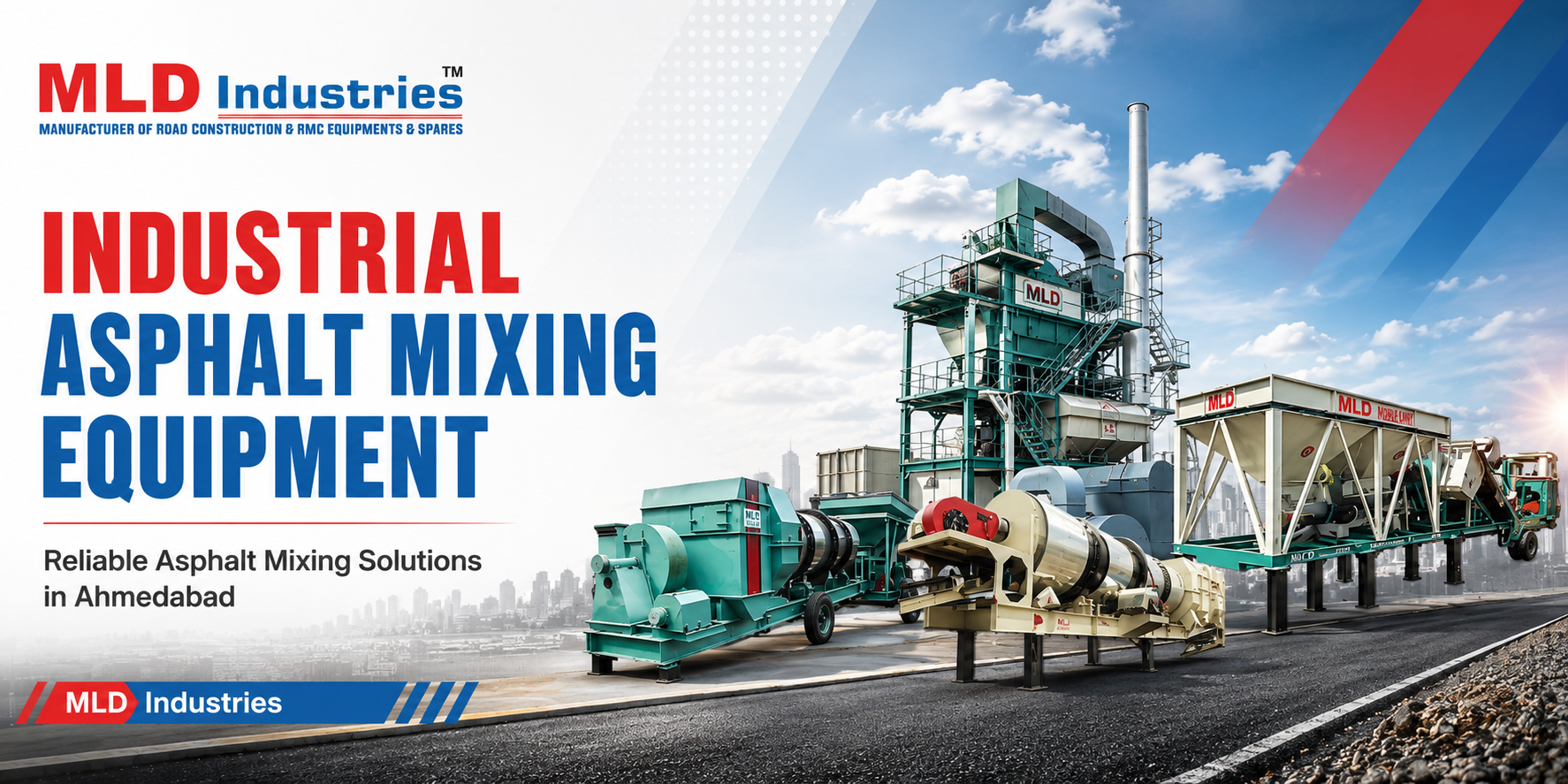
Industrial Asphalt Mixing Equipment
Explore robust industrial asphalt mixing equipment for road construction projects in Ahmedabad. MLD Industries offers reliable, high-performance solutions desig
Why This Matters in Ahmedabad
Ahmedabad, a significant industrial and commercial hub in Gujarat, experiences continuous growth in its urban landscape and surrounding regions. This sustained development drives a consistent demand for high-quality road infrastructure, from city streets and expressways to industrial park access roads. Projects related to smart city initiatives, logistical corridors, and residential developments all rely on efficient and dependable asphalt production. Local availability of advanced industrial asphalt mixing equipment ensures that construction companies can meet these demands with locally sourced, high-standard materials.
What Is Industrial Asphalt Mixing Equipment — Overview
Industrial asphalt mixing equipment, often referred to as an asphalt plant or hot mix plant, is a complex assembly of machinery designed to produce asphalt concrete. This material is a blend of aggregate (stone, sand, and filler) and bitumen, heated and mixed to specific proportions. The primary function of these plants is to heat and dry the aggregates, accurately measure and introduce bitumen, and thoroughly mix these components to create a homogenous asphalt mixture. This mixture is then transported to construction sites for paving applications.
Key Features and Technical Specifications
- Precise Aggregate Feeding Systems: Ensures accurate proportioning of different aggregate sizes for consistent mix quality.
- Efficient Drying Drums: Designed for optimal heat transfer to remove moisture from aggregates, reducing fuel consumption.
- High-Capacity Bitumen Heating and Storage: Maintains bitumen at the required temperature for proper flow and mixing.
- Advanced Mixing Units: Provides thorough and uniform blending of aggregates and bitumen for homogeneous asphalt.
- Automated Control Systems: Offers precise control over temperature, material flow, and mix proportions, enhancing operational efficiency.
- Robust Structural Design: Engineered for continuous operation and durability in demanding construction environments.
- Environmental Emission Controls: Incorporates dust collection systems and other features to minimize air pollution.
Industrial Applications and Use Cases
- National and State Highways: Producing large volumes of asphalt for new highway construction and resurfacing projects.
- Urban Road Networks: Supplying material for city streets, arterial roads, and local access routes.
- Airport Runways and Aprons: Manufacturing high-strength asphalt mixes for critical aviation infrastructure.
- Industrial Estates and Ports: Paving heavy-duty surfaces capable of withstanding constant heavy vehicle traffic.
- Residential and Commercial Developments: Creating durable parking lots, driveways, and internal roads within new complexes.
- Bridge Decks and Overpasses: Providing specialized asphalt layers for structural protection and smooth driving surfaces.
- Road Repair and Maintenance: Supplying hot mix for patching, crack sealing, and general road upkeep.
How to Choose the Right Industrial Asphalt Mixing Equipment
Selecting the appropriate industrial asphalt mixing equipment involves careful consideration of project requirements and operational capabilities. Buyers should evaluate several critical factors to ensure the chosen plant meets their specific needs.
- Production Capacity: Match the plant's output (tons per hour) to the scale and speed of your typical projects.
- Type of Plant: Determine if a continuous drum mix plant or a batch mix plant is more suitable based on mix flexibility and project size.
- Fuel Efficiency: Assess the plant's energy consumption for drying and heating, as this directly impacts operational costs.
- Automation Level: Consider the degree of automation in the control system for precision, consistency, and reduced labor needs.
- Mobility Requirements: Evaluate if a stationary, semi-mobile, or fully mobile plant is needed for frequent site changes.
- Compliance and Certifications: Verify that the equipment adheres to relevant industry standards and environmental regulations.
- Supplier's After-Sales Support: Confirm the availability of spare parts, technical assistance, and maintenance services.
- Customization Options: Inquire about the ability to tailor features like aggregate bins, bitumen tanks, or control systems.
Quality Standards and Compliance
Adherence to established quality standards is paramount for industrial asphalt mixing equipment to ensure both the integrity of the produced asphalt and the operational safety of the plant. Buyers should verify that equipment manufacturers comply with relevant Indian Standards (IS) for materials and manufacturing processes. Certifications such as ISO 9001 indicate a commitment to quality management systems throughout design, production, and service. Environmental compliance, particularly regarding emission control and noise levels, is also a critical factor to assess, ensuring the plant meets local regulatory requirements and promotes sustainable operations.
Why Company Experience and Capability Matters
The long-term performance and reliability of industrial asphalt mixing equipment are directly linked to the experience and capability of its manufacturer. MLD Industries, founded in 2004 by Mr. Poonam Panchal, brings over three decades of expertise in the road construction sector to its manufacturing processes. This deep understanding ensures that every piece of equipment is designed and built with practical field requirements in mind. The company's focus on quality control, from raw material selection to final assembly, ensures that equipment operates efficiently and consistently.
MLD Industries leverages its technical capability to offer robust and innovative solutions, supported by a skilled team and a culture of professionalism fostered by Mr. Panchal and continued by CEO Mr. Jaimin Panchal. Their commitment extends to providing reliable delivery and comprehensive after-sales support, which is crucial for minimizing downtime and maximizing productivity on project sites. This blend of experience, technical prowess, and dedicated service provides a solid foundation for buyers seeking dependable asphalt mixing solutions.
Installation, Maintenance and Care Tips
Proper installation and consistent maintenance are vital for maximizing the lifespan and efficiency of industrial asphalt mixing equipment. The installation process requires a stable, level foundation and correct assembly of all components, often guided by manufacturer specifications. Ensure all electrical and fuel connections are secure and comply with safety standards before initial operation.
Regular maintenance should include daily checks of critical components such as burners, aggregate feeders, and mixing units. Lubricate moving parts according to the manufacturer's schedule and inspect conveyor belts for wear or damage. Periodically calibrate weighing systems and temperature sensors to maintain mix accuracy. Keeping the plant area clean and free of debris also contributes to operational safety and efficiency. Adequate training for operators on both operation and routine maintenance procedures will further ensure consistent performance and extend the equipment's service life.
Frequently Asked Questions
The primary function of industrial asphalt mixing equipment is to produce asphalt concrete, a composite material used for paving roads and other surfaces. It achieves this by heating and drying aggregates, accurately measuring and introducing bitumen, and then thoroughly mixing these components to create a homogeneous, high-quality asphalt mixture ready for application.
The two main types of industrial asphalt mixing plants are drum mix plants and batch mix plants. Drum mix plants offer continuous production, making them suitable for large-scale projects requiring high output. Batch mix plants produce asphalt in discrete batches, allowing for greater flexibility in mix designs and material specifications, often preferred for diverse project requirements.
Efficient industrial asphalt mixing equipment significantly impacts project timelines by ensuring a consistent and timely supply of hot mix asphalt. Reliable plant operation minimizes delays caused by material shortages or quality issues, allowing paving crews to work continuously. This steady material flow helps projects stay on schedule and meet completion deadlines effectively.
Typical maintenance for asphalt mixing equipment includes daily operational checks, regular lubrication of moving parts, and periodic inspection of wear components like dryer drums, burners, and mixer paddles. Calibration of weighing systems and temperature sensors is also crucial for maintaining mix accuracy. Adhering to the manufacturer's maintenance schedule is essential for optimal performance.
Key safety considerations include ensuring proper guarding on moving parts, implementing lockout/tagout procedures during maintenance, and providing adequate ventilation to manage fumes. Operators must wear appropriate personal protective equipment (PPE), and emergency stop buttons should be easily accessible. Regular safety training and adherence to operational protocols are also vital.
To ensure asphalt quality, a buyer should verify that the equipment has precise aggregate feeding and bitumen dosing systems, along with an efficient mixing unit. Regular calibration of all measuring instruments and adherence to mix design specifications are critical. Consistent quality control checks on the produced asphalt, including temperature and composition, further guarantee material integrity.
Conclusion
The selection of industrial asphalt mixing equipment represents a significant investment for any road construction enterprise, particularly in a dynamic region like Ahmedabad. The reliability, efficiency, and consistent output of these plants directly influence project success, material quality, and operational costs. By focusing on factors such as production capacity, technical specifications, adherence to quality standards, and the proven experience of the manufacturer, buyers can make informed decisions. Partnering with a capable and experienced supplier ensures access to robust machinery and dependable support, contributing to the long-term success of infrastructure projects.
Get In Touch
Mld Industries