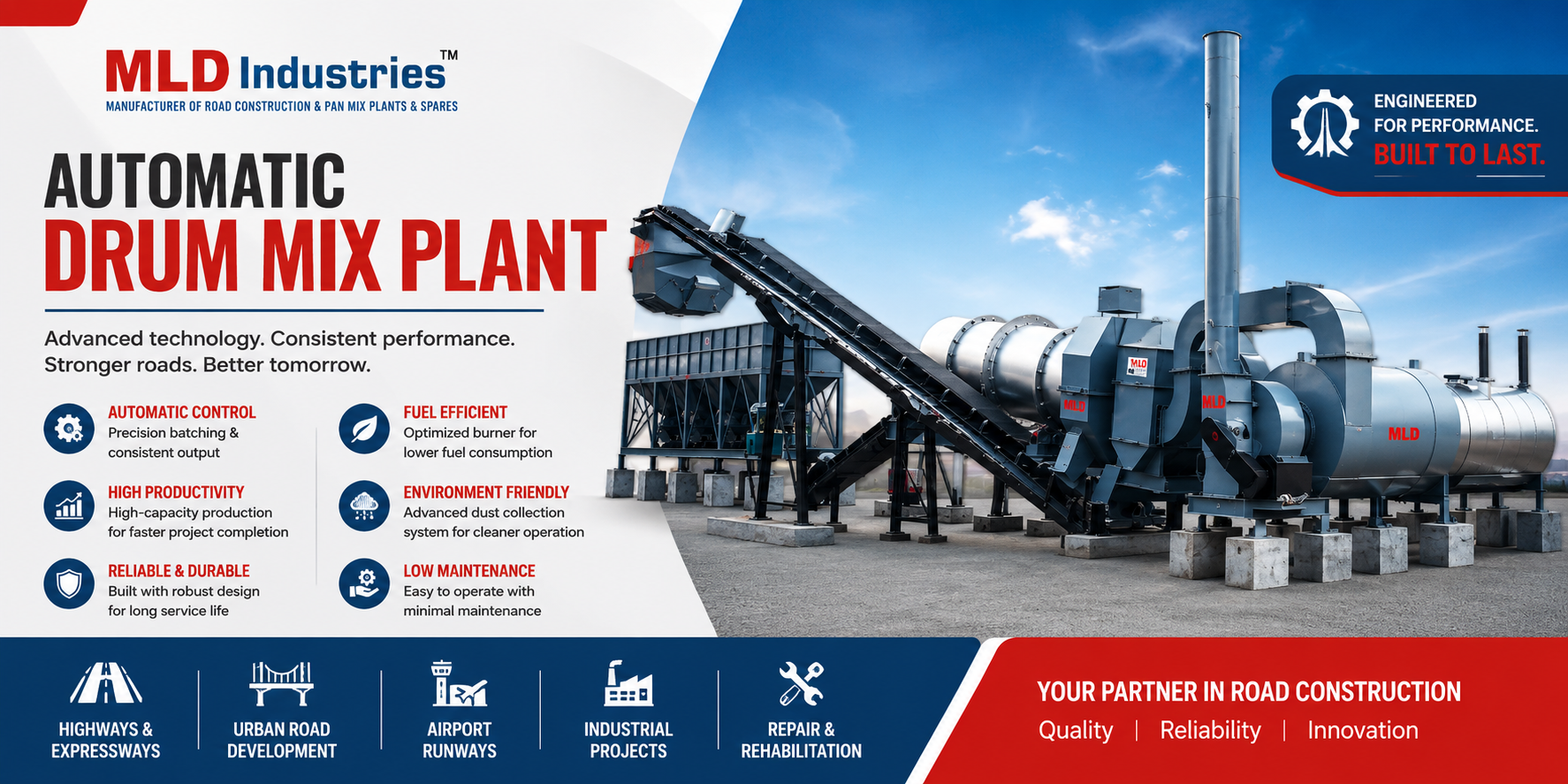
Continuous Asphalt Mixing Plant
Explore the technical advantages of a continuous asphalt mixing plant for road construction. Reliable equipment solutions from MLD Industries in Ahmedabad.
Why This Matters in Ahmedabad
Ahmedabad has emerged as a central hub for industrial and urban infrastructure development. With the rapid expansion of highway networks, industrial corridors, and urban road systems, the demand for reliable road construction equipment is higher than ever. Contractors operating in this region face unique challenges, including high-temperature working conditions and the need for rapid mobilization across various project sites. Utilizing a high-performance continuous asphalt mixing plant allows local firms to maintain consistent output regardless of the project scale, directly impacting the quality of the finished road surface and the efficiency of the construction timeline.
What Is a Continuous Asphalt Mixing Plant — Overview
A continuous asphalt mixing plant, often referred to as a drum mix plant, operates on a process where heating, drying, and mixing occur within a single rotating drum. Unlike batch plants that produce asphalt in discrete cycles, a continuous plant provides a steady stream of hot mix asphalt (HMA). Raw aggregates are fed into the drum, where they are dried and heated by a burner. Simultaneously, bitumen and filler materials are injected into the drum, ensuring a homogenous blend. This design is favored for its mechanical simplicity, reduced maintenance requirements, and the ability to produce large volumes of material continuously.
Key Features and Technical Specifications
High-efficiency drying drum designed for optimal heat transfer and moisture removal.
Advanced burner technology capable of handling various fuel types for operational flexibility.
Precision-controlled bitumen pumping systems to ensure accurate binder-to-aggregate ratios.
Robust chassis design allowing for easier transportation and rapid site installation.
Integrated dust collection systems to meet environmental emission standards.
User-friendly control panels that allow operators to monitor mix temperature and flow rates in real-time.
Heavy-duty flight design within the drum to ensure thorough material coating.
Industrial Applications and Use Cases
Construction of national and state highways requiring high-volume asphalt production.
Urban road maintenance and resurfacing projects where consistent material flow is essential.
Industrial park infrastructure development, including heavy-duty access roads and logistics hubs.
Airport runway construction where strict adherence to mix specifications is mandatory.
Large-scale commercial paving projects such as parking lots and distribution center yards.
How to Choose the Right Continuous Asphalt Mixing Plant
Selecting the correct plant requires a thorough assessment of your specific project requirements and long-term business goals. Consider the following factors before making a procurement decision:
- Production Capacity: Match the plant’s hourly output to your project’s daily paving requirements to avoid bottlenecks.
- Mobility Needs: Evaluate if your projects are stationary or require frequent relocation between different sites.
- Fuel Efficiency: Look for burner systems that offer high thermal efficiency to reduce operational costs over time.
- After-Sales Support: Ensure the manufacturer provides accessible technical assistance and a reliable supply of spare parts.
- Customization Options: Verify if the manufacturer can tailor the plant layout to fit specific site constraints or local environmental regulations.
- Ease of Operation: Prioritize systems with intuitive controls that minimize the learning curve for your site operators.
Quality Standards and Compliance
The integrity of a road depends entirely on the quality of the asphalt mix. A reliable continuous asphalt mixing plant must comply with national and international engineering standards. Buyers should verify that the equipment meets relevant BIS (Bureau of Indian Standards) or equivalent global benchmarks for machinery safety and performance. Compliance with emission norms is equally important, as modern construction sites are subject to strict environmental oversight. Always request documentation regarding material specifications and safety certifications to ensure the equipment will perform reliably under heavy-duty cycles.
Why Company Experience and Capability Matters
The manufacturing of road construction equipment is a specialized field that demands deep technical knowledge. MLD Industries, founded by Mr. Poonam Panchal, brings over three decades of experience to the design and production of asphalt mixing plants. This longevity in the industry translates into a refined manufacturing process where every component is tested for durability and operational efficiency. With leadership from Mr. Jaimin Panchal, the company continues to focus on the core values of reliability and innovation. When you partner with an experienced manufacturer, you gain access to equipment that has been field-tested in diverse conditions, ensuring that your investment is supported by a legacy of engineering expertise and a commitment to long-term performance.
Installation, Maintenance and Care Tips
Proper installation and routine maintenance are the most effective ways to extend the service life of your asphalt plant. Begin by ensuring the foundation is level and capable of supporting the weight of the equipment. Regular maintenance should focus on the following areas:
- Burner Maintenance: Clean the burner nozzle regularly to ensure efficient combustion and prevent fuel waste.
- Drum Inspection: Periodically check the internal flights for wear and tear to maintain consistent mixing quality.
- Lubrication Schedules: Adhere strictly to the manufacturer’s lubrication intervals for all bearings and moving parts.
- Calibration: Regularly calibrate the aggregate and bitumen feed systems to maintain the accuracy of the mix design.
- Dust Collection: Inspect the filter bags or wet scrubber systems to ensure compliance with air quality standards.
Frequently Asked Questions
The primary advantage is the ability to produce a constant, uninterrupted flow of asphalt mix. Because the drying and mixing occur in a single drum, the process is streamlined, which often results in lower maintenance costs and higher production efficiency for large-scale projects that require continuous material supply throughout the day.
The burner is the heart of the plant, responsible for heating the aggregates to the correct temperature. A high-quality burner ensures uniform heating, which is critical for proper bitumen coating. Efficient burners also reduce fuel consumption, which significantly lowers the operational cost per ton of asphalt produced over the life of the machine.
Many modern continuous asphalt mixing plants are designed with mobility in mind. They are often built on a modular, chassis-mounted frame that allows for relatively quick dismantling, transport, and re-assembly. This is a significant benefit for contractors who work on multiple projects across different locations and need to minimize downtime during site transitions.
The drum assembly requires regular inspection of the internal flights and the drive system. Over time, the flights can wear down, which affects how the aggregate is lifted and mixed. Keeping the drive gears and rollers well-lubricated and ensuring the drum remains balanced are essential steps to prevent mechanical failure and ensure a long service life.
To ensure compliance, it is important to invest in a plant that features an integrated dust collection system. These systems capture particulate matter before it is released into the atmosphere. When selecting a plant, ask the manufacturer for documentation regarding emission test results and ensure the equipment is designed to meet current local pollution control board standards.
Yes, a key aspect of the company’s commitment to quality is providing ongoing support to clients. This includes assistance with installation, operator training, and the availability of spare parts. By maintaining a strong relationship with the manufacturer, you ensure that any technical issues are addressed promptly, which helps keep your projects on schedule and minimizes costly downtime.
Conclusion
Investing in a continuous asphalt mixing plant is a significant step for any road construction business. By prioritizing equipment that offers high production efficiency, robust construction, and reliable support, contractors can ensure their projects meet the highest standards of quality. MLD Industries, with its extensive background in the sector, provides the technical expertise and equipment necessary to support the evolving infrastructure needs of Ahmedabad and beyond. When evaluating your options, focus on the long-term value of the machinery and the capability of the manufacturer to stand behind their product, ensuring your operations remain productive and profitable for years to come.
Get In Touch
Mld Industries