Blogs
Compact Concrete Mixing Plant
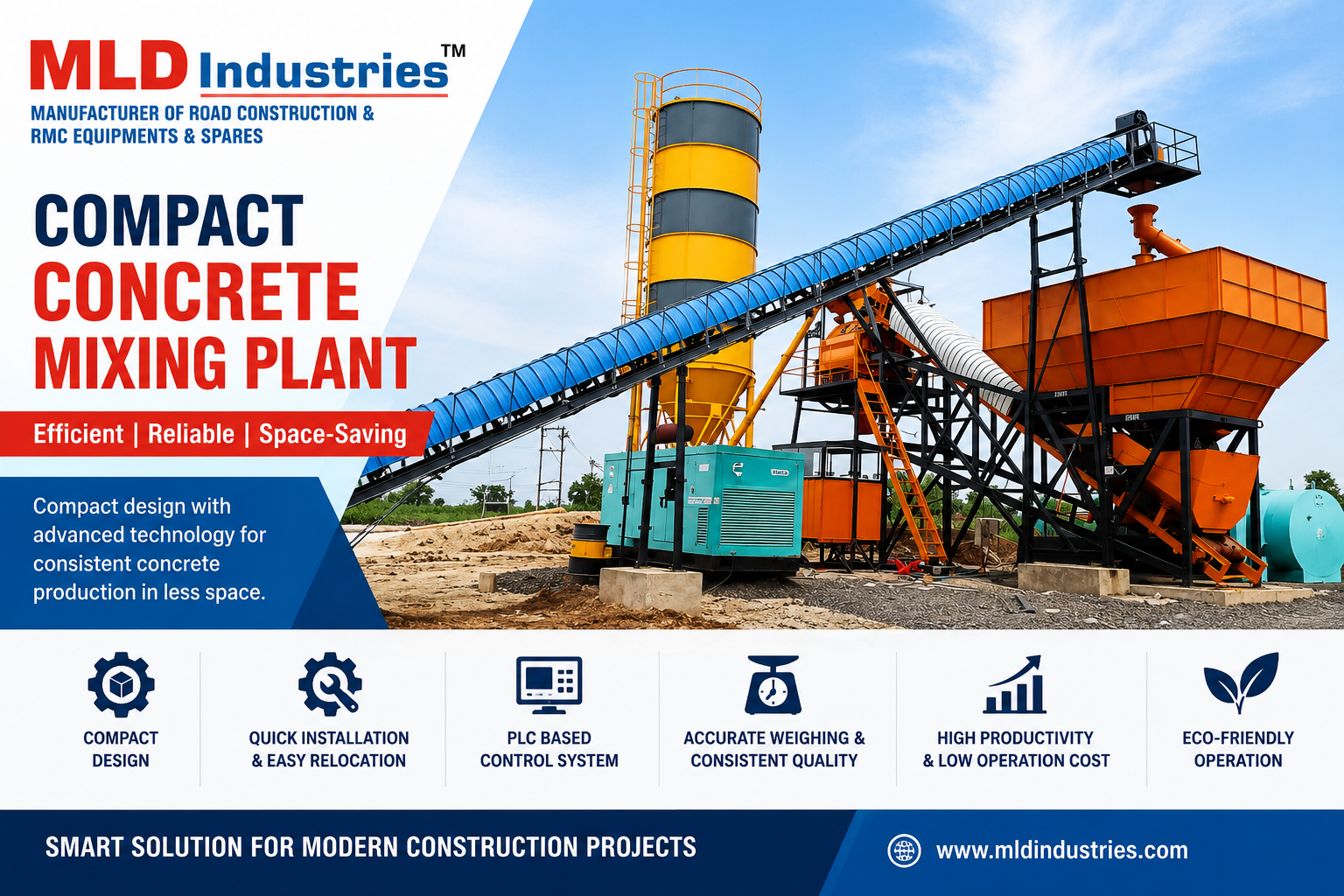
Compact Concrete Mixing Plant
Modern infrastructure and construction projects require reliable concrete production systems that deliver consistent output while operating efficiently in limited spaces. A compact concrete mixing plant is designed to meet these requirements by combining advanced batching technology, precise mixing capability, and simplified installation within a compact structure. These plants are widely used in residential projects, commercial developments, road construction, infrastructure work, and urban construction sites where space optimization and operational efficiency are essential.
A compact concrete mixing plant is developed to provide controlled concrete production with minimal operational complexity. It supports continuous and uniform concrete mixing while maintaining quality standards across every batch. Due to its modular structure and user-friendly operation, it has become a practical solution for contractors and project developers seeking dependable concrete production equipment.
According to the product details provided, the Compact Plant for RMC is designed for small to medium-scale concrete production and includes features such as quick installation, easy relocation, advanced batching technology, and a PLC-based control system.
Understanding Compact Concrete Mixing Plants
A compact concrete mixing plant is a specially engineered batching system that integrates aggregate storage, cement feeding, water dosing, additive measurement, and concrete mixing into a single setup. Unlike large stationary batching plants, compact plants require less installation space and can be relocated with comparatively less effort.
These plants are commonly equipped with pan mixers or planetary mixers that ensure uniform mixing quality for different grades of concrete. Automated control systems help operators monitor batching accuracy, mixing cycles, material flow, and production performance in real time.
The compact structure makes these plants highly suitable for urban projects where construction space is limited. They also help reduce transportation dependency because concrete can be produced directly at the project site.
How a Compact Concrete Mixing Plant Works
The working process of a compact concrete mixing plant is designed to maintain consistency and operational efficiency throughout the batching cycle. Raw materials such as aggregates, cement, water, and additives are stored in dedicated compartments and hoppers. The control system automatically measures the required quantity of each material according to the selected concrete mix design.
The aggregates are transferred through conveyor systems into the mixer, where cement, water, and additives are added in controlled proportions. The mixer blends the materials uniformly to produce consistent concrete suitable for construction applications.
Most compact batching systems include PLC-based automation for real-time monitoring and accurate batch management. This reduces manual intervention and improves production reliability.
Key Features of Compact Concrete Mixing Plants
Compact concrete batching systems are preferred because they combine productivity, space efficiency, and operational control within a single unit. Important features commonly found in these plants include:
- Compact and space-saving structural design
- Fast installation and commissioning
- Easy transportation and relocation capability
- PLC-based automatic control systems
- Accurate weighing systems for aggregates and cement
- Consistent concrete mixing performance
- Reduced material wastage during batching
- Lower maintenance requirements
- Efficient power utilization
- User-friendly operation and monitoring
Technical Capabilities and System Components
The technical structure of a compact concrete mixing plant directly influences its performance, output quality, and operational stability. These plants generally include aggregate storage compartments, screw conveyors, cement weighing systems, water dosing units, additive systems, air compressors, and mixer assemblies.
The uploaded product specification details mention models such as CP 30 and CP 45 with production capacities of 30 Cum/hr and 45 Cum/hr respectively. The systems include pan or planetary mixers, automatic PLC control panels, aggregate weighing conveyors, and dedicated water and cement weighing hoppers.
These technical configurations help maintain precise batching operations and improve overall production efficiency during continuous project execution.
Applications of Compact Concrete Mixing Plants
Compact concrete mixing plants are widely used across multiple construction sectors because of their operational flexibility and efficient output handling. Their compact footprint makes them highly suitable for both temporary and permanent construction setups.
Common applications include:
- Residential building construction
- Commercial construction projects
- Road and highway infrastructure
- Bridge construction work
- Industrial flooring projects
- Urban development projects
- Precast concrete production
- Small to medium-scale RMC production
- Smart city infrastructure development
- Government civil construction projects
Importance of Consistent Concrete Quality
Concrete quality plays a critical role in determining the strength, durability, and long-term performance of any structure. Inconsistent batching can lead to weak structural performance, material wastage, and project delays.
Compact concrete mixing plants help maintain consistency through automated batching systems and accurate material measurement. PLC-controlled operations ensure that aggregates, cement, water, and additives are mixed according to predefined specifications.
This level of accuracy improves compressive strength, workability, and structural reliability in construction projects. Uniform mixing also minimizes the chances of segregation or variation between batches.
Advantages of Compact Design in Urban Projects
Urban construction sites often face limitations related to space availability, logistics, and operational movement. Large batching systems may not be practical in densely populated construction zones. Compact concrete mixing plants address these challenges by offering a smaller installation footprint while maintaining efficient production capability.
Their modular design simplifies transportation and relocation between projects. Contractors working on multiple sites can benefit from reduced setup time and improved mobility.
The compact layout also contributes to better site organization, easier maintenance access, and smoother material flow during daily operations.
Automation and Operational Efficiency
Automation has become an essential aspect of modern concrete production systems. Compact concrete mixing plants equipped with PLC-based controls improve operational accuracy and reduce dependency on manual monitoring.
Automated systems help operators manage batching cycles, monitor production data, track material consumption, and maintain consistency across different concrete grades. This results in reduced operational errors and improved productivity.
Real-time monitoring also helps identify maintenance requirements early, reducing unexpected downtime and improving plant reliability during continuous production schedules.
Environmental and Cost Benefits
Modern compact concrete mixing plants are designed to minimize environmental impact while improving operational efficiency. Controlled batching reduces material wastage and supports efficient cement utilization. Dust control systems and enclosed material handling contribute to cleaner site operations.
Producing concrete directly at the construction site reduces transportation requirements, fuel consumption, and delivery delays. This helps contractors optimize project timelines and improve cost efficiency.
Additionally, compact plants generally require less installation space and lower infrastructure investment compared to large stationary batching facilities.
Factors to Consider Before Choosing a Compact Concrete Mixing Plant
Selecting the right compact concrete mixing plant depends on project requirements, production capacity, and operational conditions. Contractors and infrastructure developers should evaluate several technical and operational factors before finalizing a plant configuration.
Important considerations include:
- Required concrete production capacity
- Type of mixer technology used
- Automation and control system capability
- Aggregate storage capacity
- Site installation space availability
- Mobility and relocation requirements
- Maintenance accessibility
- Power consumption and operational efficiency
- Compatibility with project scale
- Availability of service and technical support
Future Demand for Compact Concrete Mixing Plants
The growing demand for infrastructure development, smart cities, highways, and urban construction is increasing the need for efficient concrete production systems. Compact concrete mixing plants are becoming more relevant because they provide operational flexibility while maintaining production consistency.
As construction projects continue to focus on faster execution, reduced environmental impact, and efficient resource management, compact batching solutions are expected to play an important role in the future of modern construction operations.
Advanced automation, modular engineering, and improved material handling technologies are also contributing to the increasing adoption of compact concrete mixing systems across the construction industry.
FAQs
Filter Using Blog Tags